In this guide
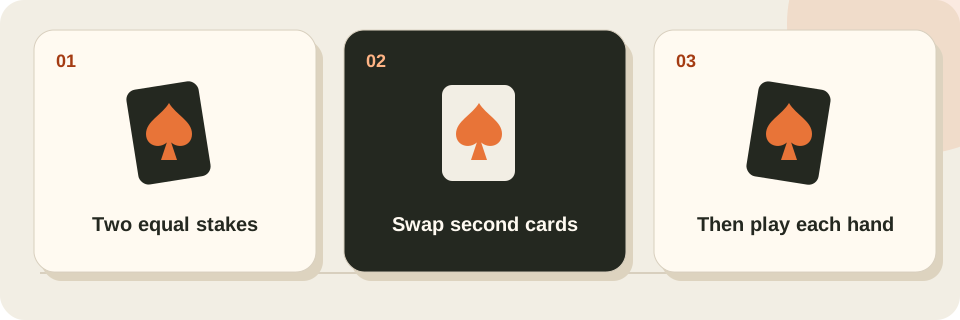
- Two equal stakes
- Swap second cards
- Then play each hand
Updated 25 October 2026 by Online Blackjack Odds.
Two equal bets create two linked hands
Blackjack Switch starts with two hands backed by equal wagers. The distinctive option is to exchange the second card of each hand. You cannot rearrange all four cards however you like. After that decision, each hand is played under the variant’s rules.
For example, suppose the hands are 10 + 6 and 5 + 10. Swapping the second cards produces 10 + 10 and 5 + 6. That demonstrates the mechanism, not a universal recommendation: evaluating a switch also depends on the dealer upcard and the complete rules.
| Detail | What to check |
|---|---|
| Two betting boxes | Both initial bets are equal; exposure starts with two stakes. |
| Exchange option | Only the second cards are switched. |
| Dealer 22 | Specified surviving hands push instead of winning. |
| Natural blackjack | Payout and treatment after switching differ from standard assumptions. |
| Side bet | A separate optional wager with separate probabilities. |
Do the switching decision first
There are two strategy problems: whether to exchange the cards, then how to play the resulting hands. The ordinary blackjack chart answers neither perfectly because the dealer-22 rule changes the value of possible outcomes. Use an analysis for the exact Switch rules, including deck count and dealer soft-17 procedure.
A useful drill is to deal four cards into two ordered pairs and write both possible arrangements. Keep the first card in each pair fixed. Compare the totals and whether an ace counts as eleven. This prevents the common mistake of imagining a swap the rules do not allow.
You wager $10 on each of two hands. Is your initial exposure $10 or $20?
$20. Two equal wagers are required in this example, before any additional doubles or splits. A displayed per-hand limit can understate the money committed to the round.
Do not assume a switched ace-ten receives the same treatment as a natural dealt in the original hand. Read the exception explicitly. Continue with Zappit for a different extra option balanced by dealer-22 pushes.
Sources and further reading
Examples are educational, not a promise of results. Product descriptions do not establish local availability or endorse an operator.