The full guide
What changes in this game?
Player/dealer procedures, both-bust comparisons and collection charges can make this a different game from ordinary casino blackjack.
Version covered: The Bicycle Casino’s published No Bust 21st Century rules are the example here. Its natural descriptions need confirmation at the actual table; the name alone is not a complete specification.
For comparison, ordinary blackjack uses standard 52-card decks, pays qualifying naturals according to the table, and normally pushes equal ordinary totals. Never assume every other rule stays the same.
| Feature | This reference version | Why it matters |
|---|---|---|
| Banking procedure | Hands are compared with a player/dealer; the published rules describe a rotating opportunity to bank. | Read action order, available coverage and settlement procedures instead of assuming ordinary house-banked play. |
| Both sides bust | The published comparison can push when the player is closer to the target; an equal busted total loses. | A player bust is not always settled by the ordinary immediate-loss rule. |
| Natural classification | The page describes an ace-ten natural and separately a bonus-ace natural valued at 21.5. | Confirm the special card and ranking definition before applying a numerical strategy. |
| Charges and limits | A table tag sets betting limits and collection rates; the rules describe collection before the hand. | A collection is an additional cost, not a hand payout or a bonus. |
How the strategy differs
Start with the named rule sheet
“21st Century” is not a promise that every venue uses the same cards, target, natural ranking or banking method. This guide uses one published No Bust reference to explain the differences. It does not confirm that a particular table is currently operating or that a similarly named game follows these rules.
Follow the settlement order
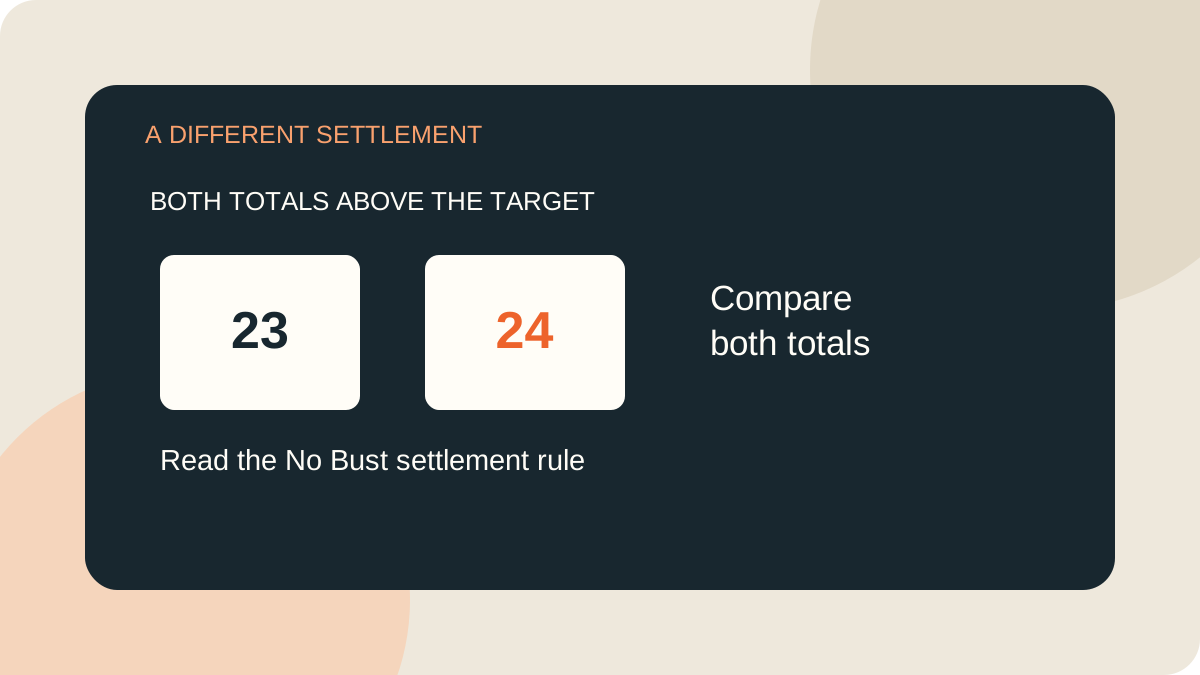
In the linked rules, a non-busted hand beats a busted opposing hand. When both totals are above the target, the player/dealer wins if closer; the player gets a push if closer; equal busted totals go to the player/dealer. Those outcomes are different from ordinary blackjack, where the player’s bust normally loses immediately.
Do not hide uncertainty in the natural definition
The reference uses both an ordinary ace-ten description and a separate special bonus-ace description valued at 21.5. The actual table rules must resolve which cards qualify and how they rank. Do not assume jokers, a particular special deck or a universal natural payout without that information.
Strategy needs more than a familiar total
A both-bust comparison, different forced-action rules, player/dealer procedure and collection charge alter the problem. The linked sheet also distinguishes some double-deck split restrictions from other versions. Our six-deck dealer-peek chart is not analysed for this game. A reliable decision table must specify the exact card and settlement rules first.
Before your first hand
- Obtain the exact table rules and collection rate.
- Resolve the natural and special-card definitions.
- Read both-bust and tie settlement carefully.
- Use only a strategy analysed for that implementation.
Common questions
Does “No Bust” mean I cannot lose after busting?
No. The comparison rules can still make the player lose, including equal busted totals in this reference.
Is a collection included in a quoted blackjack payout?
Do not assume it is. Read the collection separately and include it in any cost comparison.
Choose a matching strategy. Our interactive standard chart and practice trainer teach their own stated rules. They do not simulate this variation. Use the version-specific references below for variant decisions.
Compare another game
Rules and strategy references
Public references checked 29 October 2026. The examples use the stated rules; they do not establish current casino availability, a universal house edge or a guarantee of results.
Check your understanding
Three quick questions. Choose an answer to see why it fits. Your answers stay on this page.